
How to Build a Cohesive Wedding Aesthetic (Even If You Love Every Style)
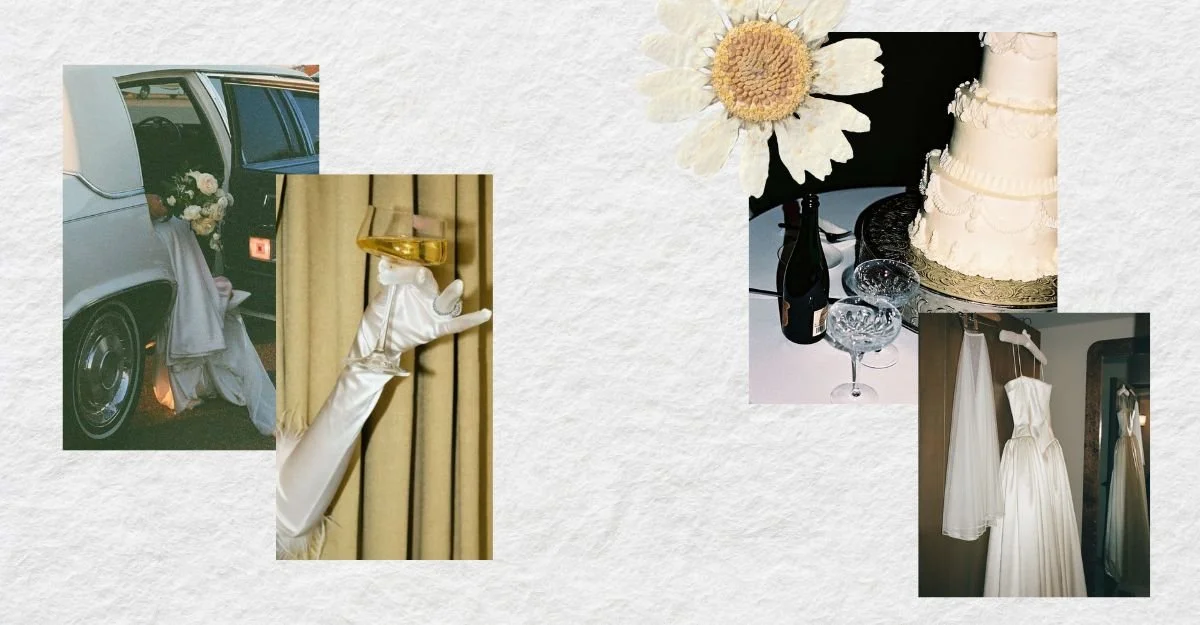
You've been saving wedding inspiration for months now. Your Pinterest boards are overflowing with moody florals, minimalist tablescapes, garden party vibes, and that one incredible art deco venue you can't stop thinking about. Everything is beautiful. Everything speaks to you. And now you're supposed to pick just one direction and stick with it?
Here's the thing: loving multiple aesthetics doesn't make you indecisive. It makes you human. The problem isn't that you have too many ideas, it's that no one's given you a actual framework for filtering them. You've been told to "find your vision" and "stay true to your style," but what does that even mean when three completely different tablescapes make your heart race? The truth is, a cohesive wedding aesthetic isn't about limiting yourself to one rigid category. It's about finding the common thread that runs through everything you love, then building around that single north star so your wedding feels intentional instead of chaotic.
This is your step-by-step guide to narrowing down your visual direction without feeling like you're giving up all the other beautiful things you've discovered. We're going to help you identify what you're actually drawn to, test whether your choices work together, and avoid the mashup mistakes that make weddings feel disjointed. By the end, you'll have a clear aesthetic direction and the confidence to make vendor decisions that support it.
Start With Aesthetic Archetypes, Not Individual Details
Before you can narrow anything down, you need to understand what you're working with. Instead of thinking about your wedding as a collection of pretty things you like, think about the overall feeling or world you want to create. Wedding aesthetics usually fall into a handful of archetypes, and identifying which ones you're drawn to will help you see patterns in your inspiration.
The main archetypes include:
Romantic garden (soft, floral-heavy, natural)
Modern minimalist (clean lines, restrained color palettes, architectural)
Classic elegant (timeless, refined, traditional with elevated touches)
Moody dramatic (rich colors, candlelight, intimate)
Boho eclectic (textured, relaxed, globally-inspired)
Vintage nostalgic (retro details, found objects, sentimental)
You might also see rustic countryside, art deco glamour, or coastal relaxed, depending on how specific you want to get.
Look through your saved inspiration and start sorting images by archetype rather than by category like "centerpieces" or "invitations." You'll likely notice that you're drawn to two or three archetypes more than others. Maybe you keep saving moody romantic images, anything with soft candlelight and deep florals. Or perhaps you're pulled toward modern elegant, where minimalist structures meet luxe materials. Seeing these patterns is the first step toward understanding your actual aesthetic preferences versus just appreciating something beautiful in isolation.
Use the 5-Image Litmus Test to Find Your North Star
Once you've identified your top two or three archetypes, it's time to get ruthlessly specific. This is where the 5-image litmus test comes in, and it's more revealing than any Pinterest board you've ever made.
Here's how it works:
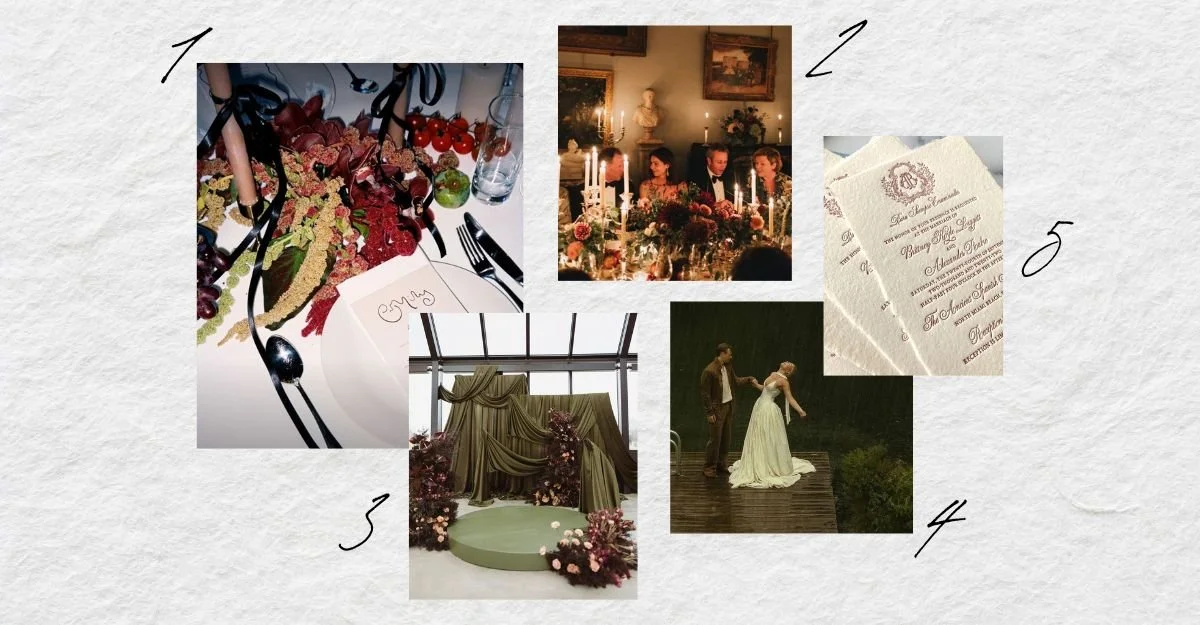
Choose exactly five images that represent your ideal wedding. Not fifty, not fifteen. Five total images that you'd show to every single vendor to communicate your vision.
These five images should work together as a cohesive set. They should share visual DNA, whether that's a consistent color story, a similar level of formality, a shared approach to texture, or a common mood. If you laid them out side by side, a stranger should be able to describe the aesthetic direction without you saying a word. This exercise forces you to prioritize and commit in a way that endless scrolling never will.
As you narrow down to your five images, pay attention to what you're willing to let go. If you keep trying to include that colorful Moroccan tablescape alongside your soft neutral garden reception, one of them doesn't actually belong in your core vision. That doesn't mean you can't incorporate color or global influences, it just means the specific execution in that image isn't aligned with your north star. The goal is to find five images where nothing feels like an outlier.
When you've landed on your five images, write down what they have in common. Is it the soft, diffused lighting? The organic, asymmetrical arrangements? The limited color palette? The mix of rough and refined textures? These commonalities become your aesthetic guidelines. They're the principles you'll come back to every time you need to make a decision about anything visual for your wedding.
The Critical Don't: No Aesthetic Mashups
The biggest mistake you can make after identifying your direction is trying to have it all anyway. You've heard the advice to blend styles or mix and match, and while there's a version of that which works, most attempts at aesthetic mashups result in weddings that feel confused rather than curated.
A mashup happens when you try to give equal weight to two or more distinct aesthetics that don't share common ground. Rustic barn elements mixed with black-tie glam. Bohemian macrame alongside formal ballroom styling. Minimalist modern next to maximalist vintage. These combinations fight each other visually because they're rooted in different philosophies about formality, texture, color, and space. Your eye doesn't know where to land, and the overall effect reads as indecisive rather than intentional.
This doesn't mean you can't bring in influences from multiple places. The key is letting one aesthetic lead while others play a supporting role. If your north star is modern minimalist but you love some warmth and texture from the boho world, you might incorporate natural fiber table runners and handmade ceramic plates within your clean-lined space. The bones of your wedding are still minimalist, the texture is just a subtle layer. But if you tried to give equal space to both aesthetics with half the reception modern and half bohemian, it would fall apart.
Trust your 5-image litmus test here. If something doesn't feel like it could live in the same visual world as those five images, it probably doesn't belong in your wedding design. You can appreciate it, save it for another event, or find a way to translate the element you love into your actual aesthetic language. But don't force it in just because you think you should include everything that appeals to you.
Build Your Vendor Alignment Cheatsheet
Once you have your north star defined, you need to make sure every vendor you hire can actually execute that vision. This is where a lot of weddings go sideways, not because the couple didn't have a clear aesthetic, but because they hired vendors who specialized in something completely different.
Create a simple vendor alignment cheatsheet that you'll reference during every consultation. At the top, include your five north star images and a one-sentence description of your aesthetic direction. Then list out the key visual elements that matter most:
Your color palette with specific tones
Your approach to texture and materials (i.e. matte/glossy/natural elements/industrial materials etc)
Your level of formality (Black-tie? Semi-formal? Casual?)
Your stance on symmetry versus organic arrangements (Orderly or free-flowing?)
Any absolute no-go elements (if you hate taffeta bows, make a note)
When you meet with vendors, show them your cheatsheet and ask directly if this aesthetic is something they're excited about and experienced in. Look at their portfolio and identify which past work aligns with your direction. A florist who specializes in tight, symmetrical arrangements might be technically skilled, but if your vision is loose and wild, they're not the right fit. A photographer who shoots bright and airy won't naturally capture the moody intimate feeling you're going for, even if their work is beautiful.
Pay special attention to your core design vendors: your florist, your planner or designer if you're using one, and your rental company. These are the people who will have the most influence over your visual outcome. If they instinctively understand your aesthetic and have executed it successfully before, everything gets easier. If they're trying to adapt their usual style to fit your vision, you'll spend the entire planning process course-correcting and compromising.
Don't be afraid to pass on a vendor who's talented but not aligned. You're not looking for someone who can deliver any aesthetic well, you're looking for someone who naturally works in your aesthetic language. When you find vendors who get it immediately, who add ideas that feel like extensions of your vision rather than departures from it, you'll know you've found your team.
Test Your Decisions Against the North Star
As you move through the planning process, you'll make hundreds of small visual decisions. Invitation paper stock. Chair styles. Cake design. Cocktail napkin colors. Each one is an opportunity to either reinforce your cohesive aesthetic or chip away at it. The way you stay on track is by consistently testing decisions against your north star.
Before you commit to anything visual, look back at your 5 images. Does this choice feel like it belongs in the same world? Does it support the mood and visual principles you've established, or is it pulling in a different direction? If you're considering brass candlesticks but all your north star images feature soft, organic elements without metallic shine, those candlesticks probably aren't right, no matter how beautiful they are on their own.
This doesn't mean every single detail needs to appear in your inspiration images. It means every detail should feel consistent with the overall aesthetic language. If your north star is romantic garden with soft, muted tones and natural textures, you can absolutely include elements that aren't literally in those five photos, as long as they share that same gentle, organic quality. A handmade name card, a silk ribbon in your color palette, a vintage velvet chair, they all work because they speak the same visual language.
When you're unsure about a decision, imagine placing it directly into one of your north star images. Does it disappear into the scene because it belongs there, or does it stick out? That gut reaction will tell you what you need to know. Trust it, even when you really love the item in question. There will be other events and other opportunities to use that thing you love. This particular wedding needs to stay true to its own aesthetic story.
Standing By Your Vision
You now have a clear process for defining and maintaining a cohesive wedding aesthetic, even when you're drawn to multiple styles. You understand your archetype patterns, you've identified your 5-image north star, you know why aesthetic mashups fail and how to avoid them, and you have a system for keeping your vendor team and your decisions aligned with your vision.
The confidence you'll feel from having this clarity will change your entire planning experience. Instead of second-guessing every choice or feeling overwhelmed by options, you'll have a framework for making decisions quickly and with certainty. You'll be able to communicate your vision clearly to vendors, friends, and family. And most importantly, your wedding will feel cohesive and intentional, a true reflection of a singular aesthetic point of view rather than a collection of pretty but disconnected ideas. That's when a wedding transcends "nice" and becomes genuinely memorable.